
When a section of road gives way, it looks sudden. A vehicle drops, a hole appears, and the footage does the rounds on WhatsApp within the hour.
It was not sudden. The ground underneath had been washing away for months, sometimes longer. And in most cases there was something visible at the surface the entire time, telling anyone who looked that the support underneath was failing.
Usually that something is a manhole cover that moves.
What a rocking cover is actually telling you
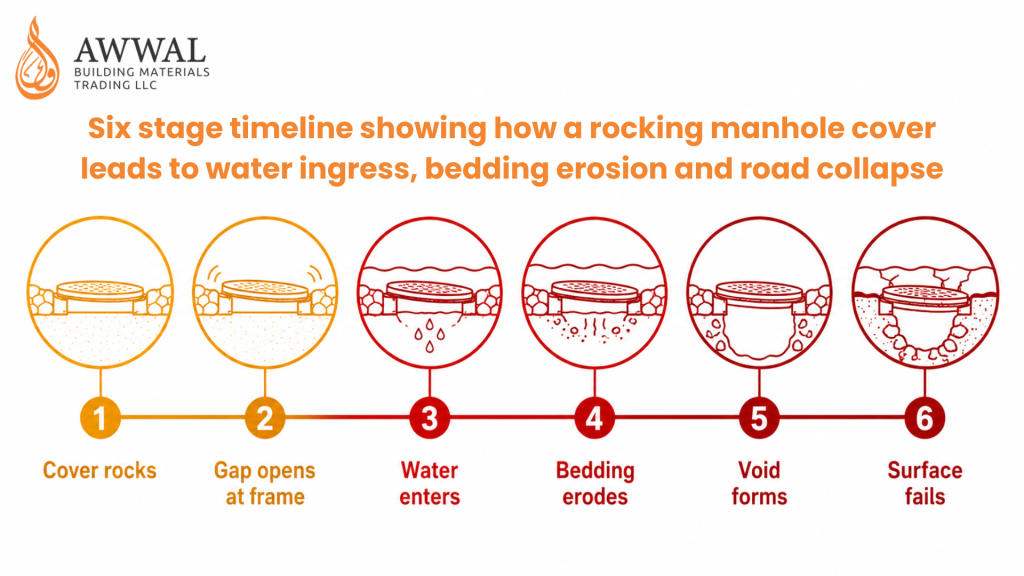
A cover that shifts under a tyre is not a cosmetic problem or a sign of age. It means the contact between the cover and the frame has failed somewhere, and there is now a gap where there should not be one.
That gap is the entry point. Surface water finds it during rainfall, runs down past the frame, and reaches the bedding layer underneath. Mortar and compacted material that was placed to support the frame starts washing out, a little at a time, with every rainfall event.
What forms underneath is a void. Not immediately, and not visibly. But the frame is now sitting on progressively less support than it was designed to have, and the road surface around it is bridging a gap that grows every season.
By the time the surface cracks or dips, the erosion underground is already well advanced.
Why this is more common than it should be in the UAE
Two conditions make this worse here than in most markets.
Rainfall arrives concentrated rather than spread out. A single storm can put more water through a compromised joint in a few hours than a temperate climate would deliver in weeks. The erosion happens in bursts, not gradually.
And thermal cycling loosens joints that would otherwise stay tight. Summer surface temperatures on exposed asphalt run far above air temperature, then drop sharply overnight. Metal expands and contracts against a frame doing the same thing. A joint that was sound in year one has been through hundreds of these cycles by year five, and any tolerance left in the installation gets worked at.
Neither of these is dramatic on its own. Together they turn a small gap into a structural problem faster than most maintenance schedules anticipate.
The three causes, and why replacing the cover usually fails
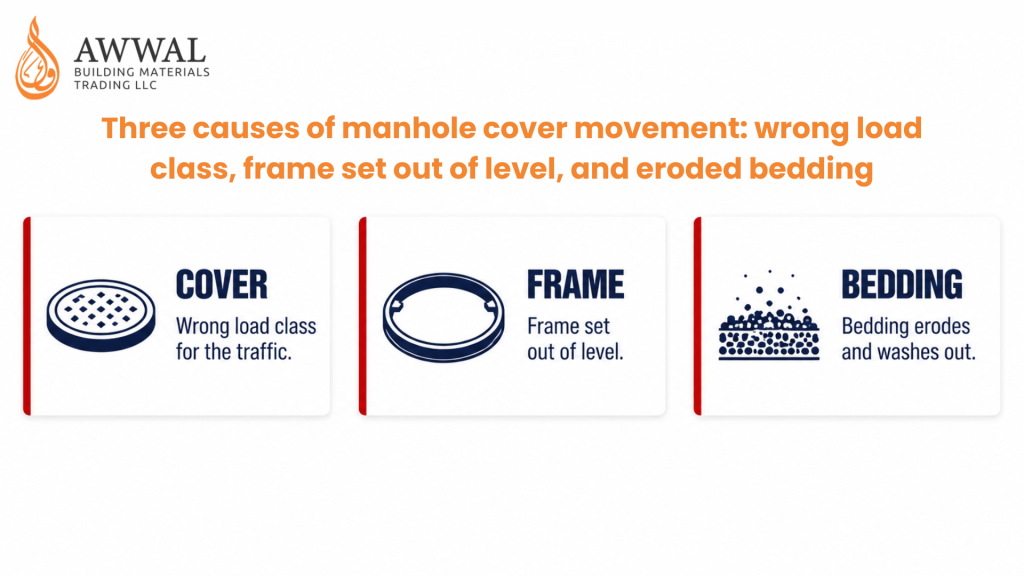
There are only three reasons a cover moves, and the cover itself is the least common of them.
The load class is wrong. A cover specified below the traffic that actually crosses it will deform under load. A B125 on a road that sees delivery trucks was never built for that weight. This is the one most people check first.
The frame was set out of level. If the frame sits proud or low relative to the finished road surface, the cover cannot seat evenly regardless of how well it was manufactured. Every vehicle that passes works the seat looser.
The bedding has settled or washed out. The mortar bed under the frame gives way, the frame drops fractionally, and the cover starts moving. Nothing about the cover has changed at all.
This is why replacing the cover so often fails to fix anything. Fit a new cover onto a frame that is out of level, or onto bedding that has already eroded, and it starts rocking for exactly the same reason the old one did. The replacement cost lands on the books and the underlying problem carries on.
What to check, and how long it takes

The inspection that matters is not complicated.
Press the cover firmly at opposite corners and watch where the movement originates. If the cover shifts within a frame that stays still, the issue is the cover or its fit. If the frame moves with it, the problem is underneath.
Check the cover against the surrounding road surface. Anything sitting visibly proud or recessed indicates the frame was not set correctly or has since dropped.
Look at the joint where the frame meets the concrete collar. Cracked or eroded mortar, or staining that suggests water has been tracking through, points to bedding loss below.
Ten minutes per cover. Less once you know what you are looking at.
The cost difference
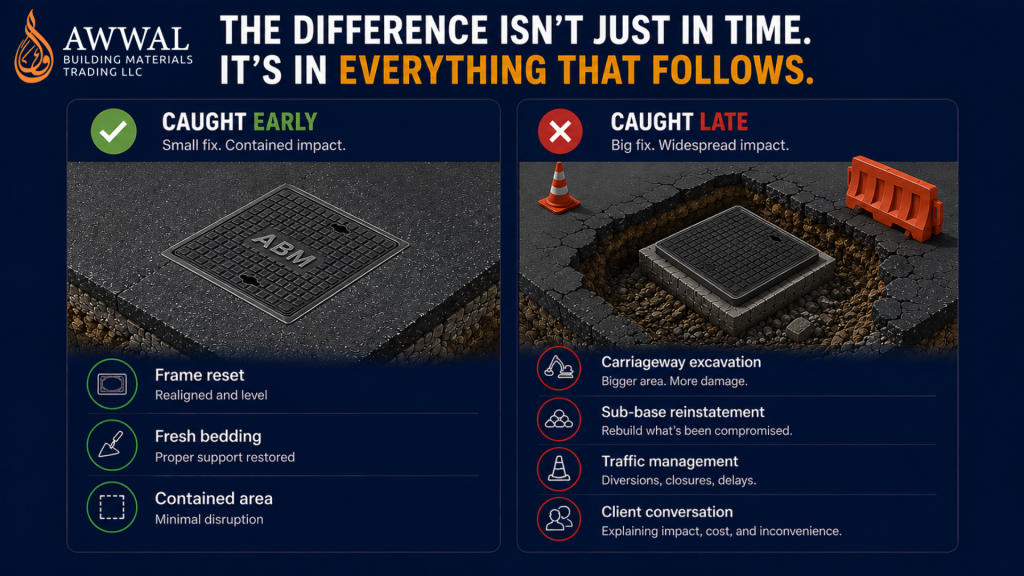
Catching a rocking cover early means a frame reset and fresh bedding. It is a contained job on a contained area.
Catching it after subsidence has developed means excavating a section of carriageway, reinstating the sub-base, and doing it under traffic management on a live road. On a project still inside its defects liability period, it also means a conversation with the client about why a road that was handed over recently is being dug up again.
The gap between those two outcomes is months of noticing, not money.
What correct specification prevents
A cover matched to its actual traffic load, seated in a frame set level to the finished surface, on bedding that was compacted properly and has not been left exposed to water ingress, does not rock. There is no gap, so there is no infiltration, so the bedding stays intact.
Dimensional compliance matters more here than most specifications acknowledge. A cover that meets EN 124 for load but sits loosely in its frame has a tolerance gap from day one, and that gap does the same job a poorly set frame does. Load class and dimensional fit are separate questions, and both need answering before an order is placed.
At Awwal Building Materials, dimensional drawings are supplied alongside the EN 124 test certificate on every order, so the frame and cover fit can be verified before delivery rather than discovered on site.
Have a cover that is moving and not sure why? Send us the site details and we’ll tell you what to check first.
📩 [email protected]
📞 +971 52 562 9998
🌐 awwalbm.com